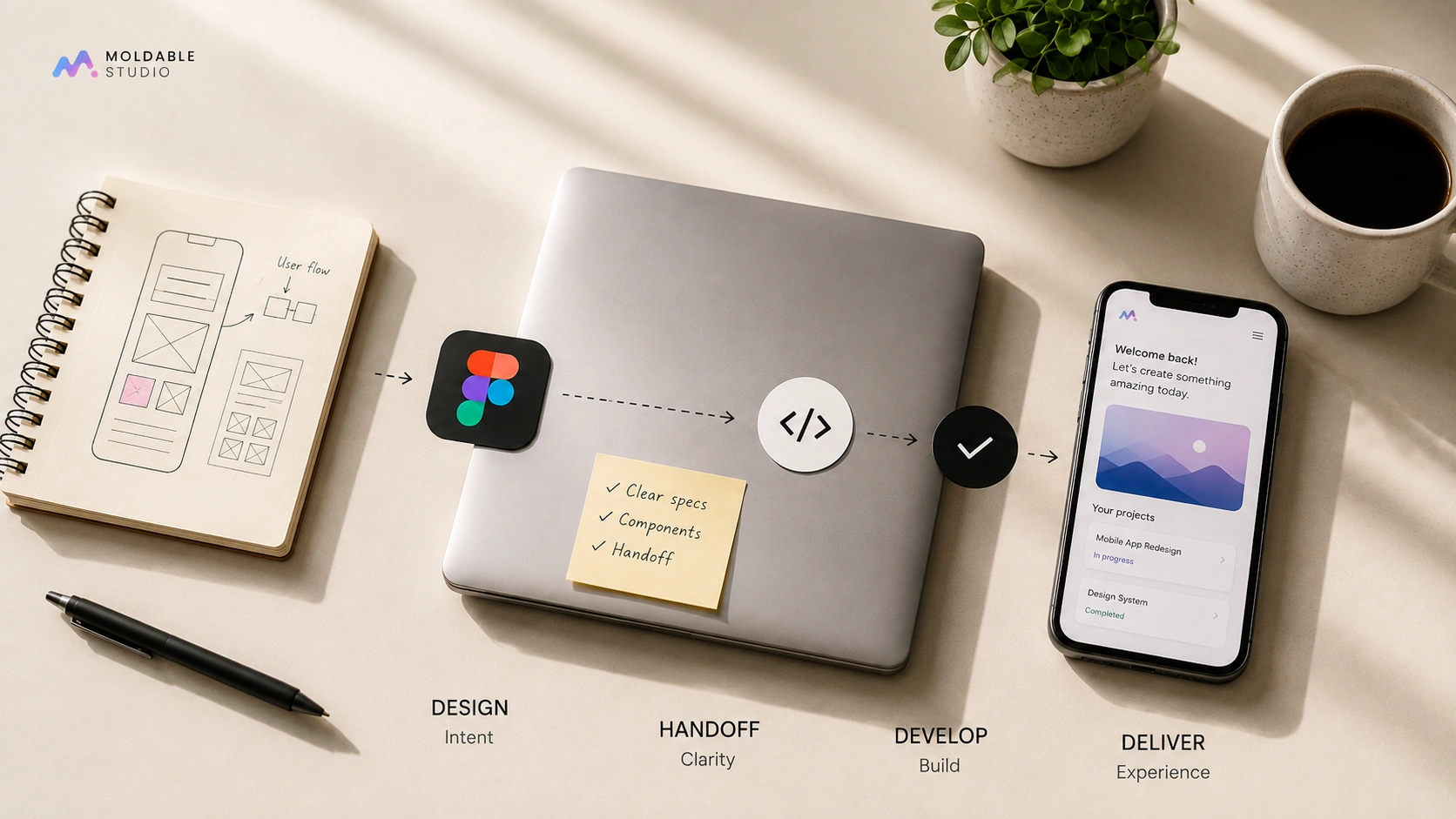
Plenty of design teams pour weeks into getting every detail right — research, prototype testing, a dozen rounds of revisions. Then the real product ships, and it looks and behaves nothing like what was designed. This usually isn’t because the dev team wasn’t good enough. It’s because a lot of organizations still treat design as done the moment the Figma file is finished — forgetting that handoff is part of the experience too.
A Great Experience Shouldn’t End at Figma
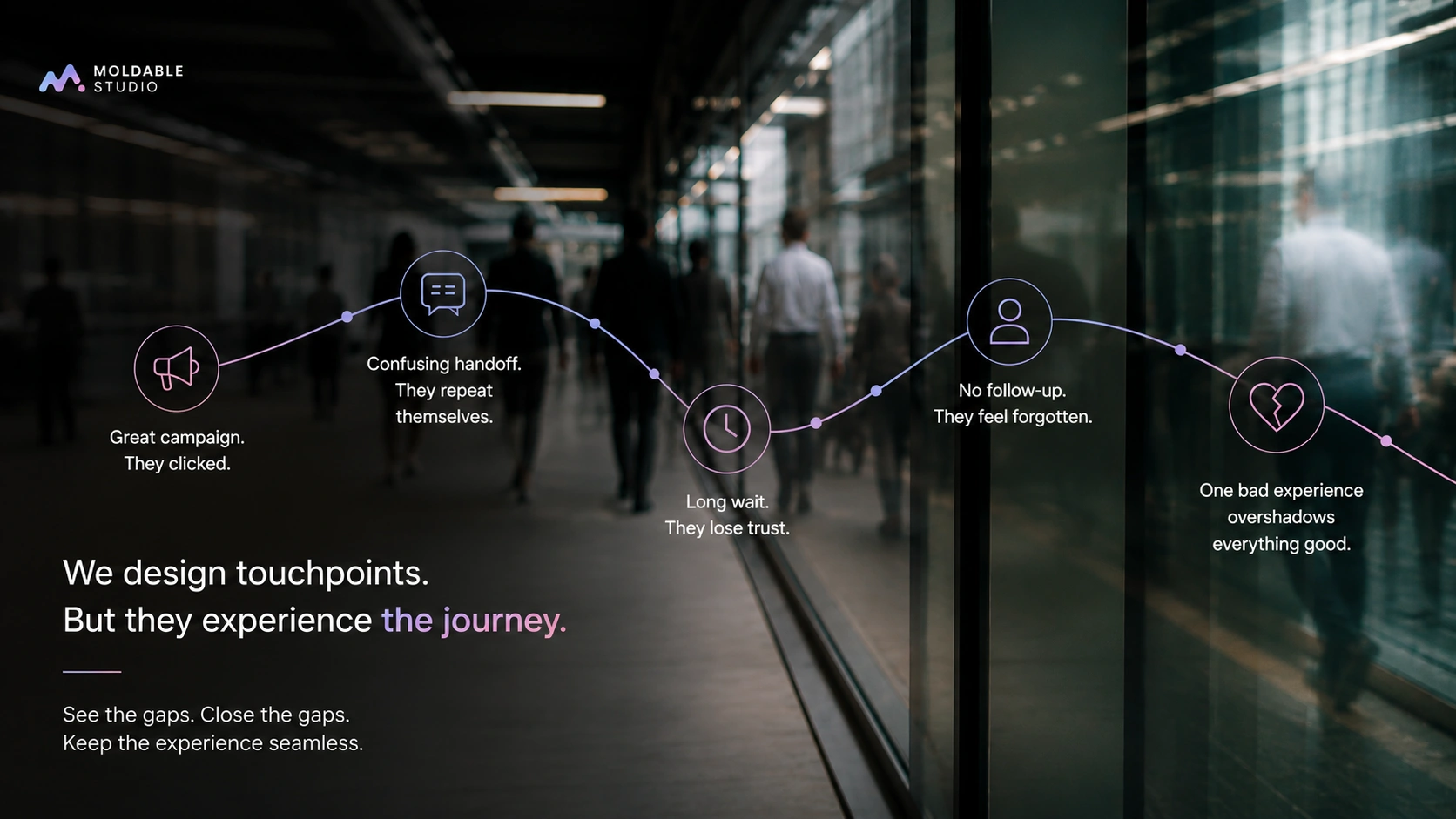
Customers never see the original design file — they only see what actually gets built. No matter how polished the design, if there’s a gap in how it gets handed off, the quality customers actually receive will never match what was intended. That’s why we treat Service Experience — the experience of delivering the work — as one of four core dimensions to take seriously, right alongside Brand, Customer, and UX Experience.
The Gap Between Design and Development Is a Real Risk
Every time a developer has to guess a designer’s intent, every time spacing or a button’s states aren’t clearly specified, every time feedback takes too long to arrive — the real cost isn’t just time. It’s quality slipping and trust quietly eroding between teams. Over time, designers start to feel like their work gets “butchered” in development, and developers start to feel like the designs were never realistic to build. Neither is good for the work or for morale.
A Design System Isn’t a Nice-to-Have — It’s the Backbone
Plenty of organizations treat design systems as something to get to when there’s spare time, when really it’s the foundation that keeps every part of the product pointed in the same direction — and makes handoff dramatically faster. A good design system isn’t just colors and fonts. It includes decision principles, every state a component can be in, and documentation the dev team can actually reference without having to ask twice.
What Real Cross-Functional Collaboration Looks Like
The fix isn’t just better tools — it’s how teams work together. The best-working teams tend to share three things: they’re involved from the start, not handed a finished file; they share a common language through a design system both sides actually trust; and they run regular post-development quality reviews against the original design, not just a check right before launch.
Wrapping Up
Organizations that actually want quality experience need to treat delivery as part of the design process from day one — not a final step that gets rubber-stamped. Because no matter how beautiful the design is, if it never reaches real users in the quality it was meant to have, it never really mattered.