When people talk about good UX, they usually picture buttons that do what you expect, forms that don’t confuse you, screens that flow smoothly. All true — but it’s not enough. “Easy to use” is the baseline every digital product should already meet, not the finish line you should be proud of. The bigger question is: does this easy-to-use product actually get the business where it needs to go?
“Easy to Use” Is the Baseline, Not the Goal
A product can be easy to use and still miss the mark if it doesn’t shift the behavior the business actually needs — signups don’t grow, people don’t come back. We’ve seen apps score sky-high on usability testing while the business kept growing slowly, because the team obsessed over how smooth the screens felt and never asked whether that smoothness was actually leading anywhere valuable.
Good UX Has to Answer Both Sides
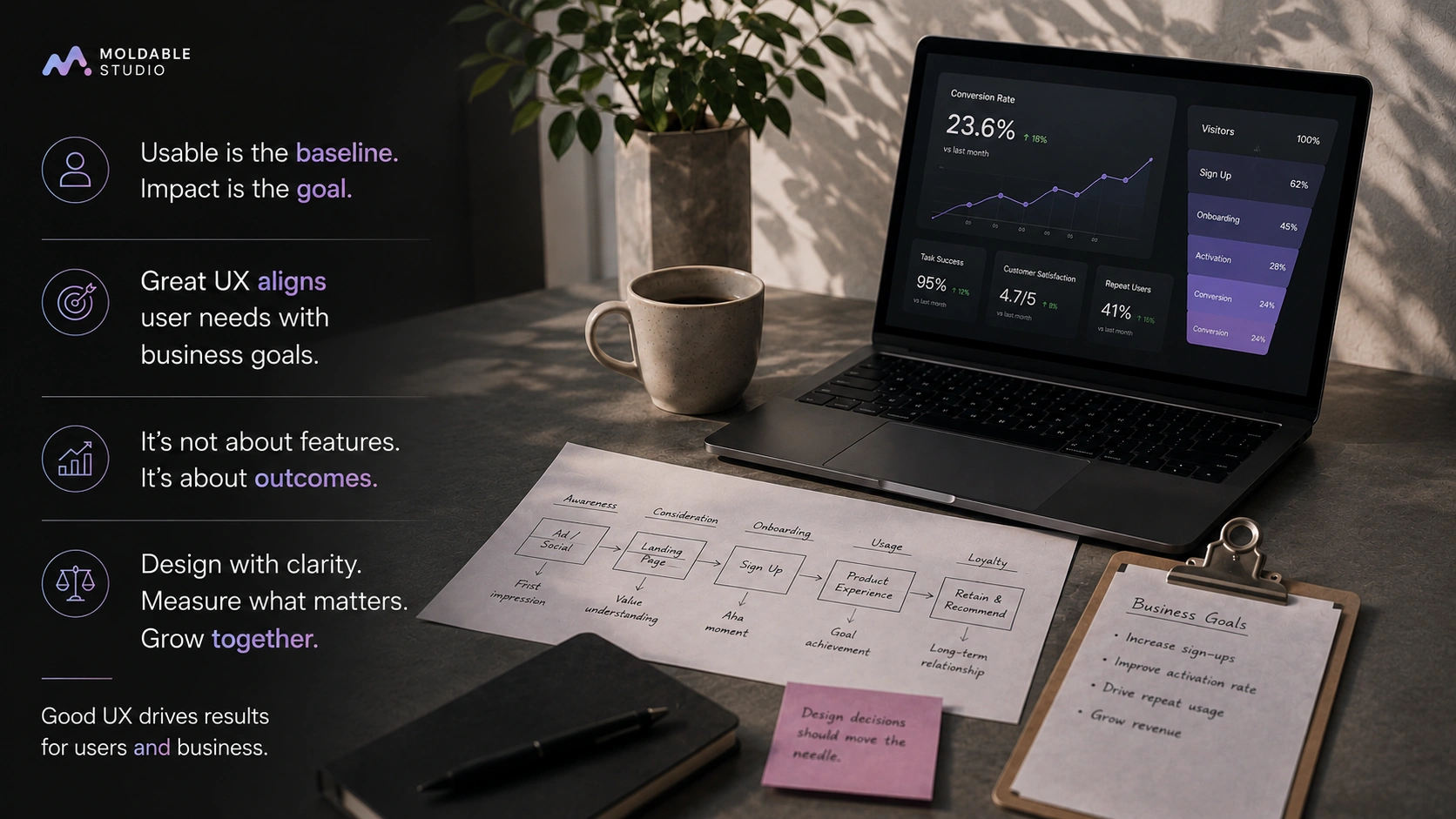
Great design sits at the intersection of three things: what users need, what the business needs, and what’s technically feasible. Ignore any one of them and you get a lopsided result. Design purely for users and you might get a product people love that the business can’t sustain. Design purely for business goals and you might boost short-term sales while quietly wearing down long-term trust.
A Real Example: When Conversion Comes From Flow, Not Features
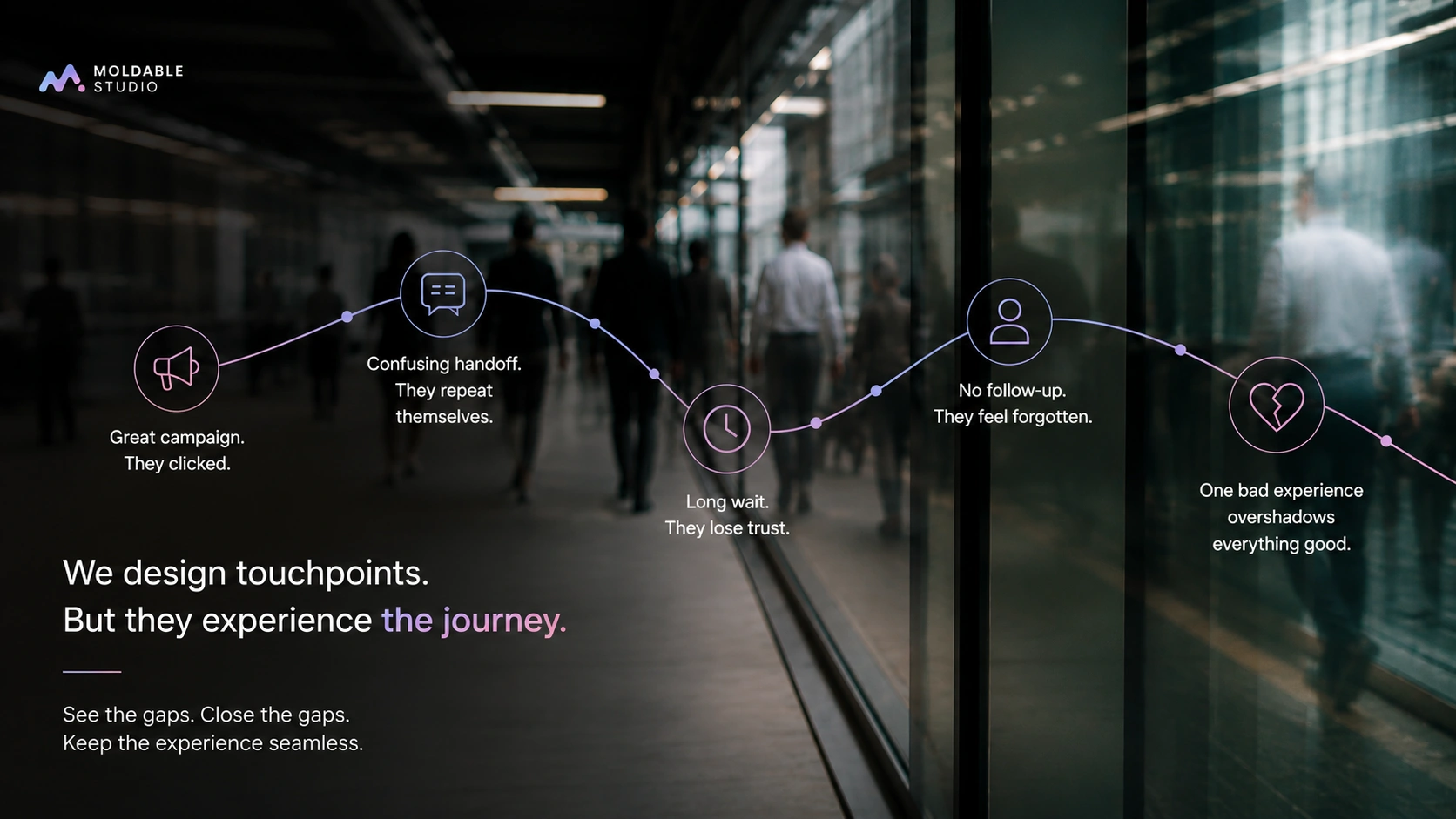
In plenty of projects we’ve stepped into, low conversion had nothing to do with missing features — it came from a sequence that created unnecessary hesitation. Asking for information too early. Burying the product’s value behind too many steps. Just reordering things, without adding a single new feature, often moves the needle more than shipping another function ever would.
How to Actually Balance Both Sides
Start with a clear business goal, paired with a real, deep understanding of what drives your users. Then design, test, and measure using metrics that connect both sides — not just satisfaction scores, not just revenue numbers in isolation. That’s what gives every design decision a reason that holds up on both fronts.
Wrapping Up
The best UX isn’t the one people praise as “easy to use” — it’s the one that gets both users and the business to their goals, sustainably. Once you start measuring design success by business outcomes instead of just how polished the screen looks, that’s the moment design becomes a real competitive edge.